
From Spreadsheets to Software: Modernizing Your Service Business
FieldConnection Team · 4 min read · March 14, 2026
You started your business with a phone, a truck, and a notebook. As you grew, the notebook became a spreadsheet. The spreadsheet became three spreadsheets. Now you've got leads in your email, jobs on a whiteboard, invoices in QuickBooks, and a vague sense that things are slipping through the cracks.
Sound familiar? You're not alone. The majority of small field service businesses — junk removal, plumbing, HVAC, landscaping — are still running critical operations on spreadsheets and manual processes. It works until it doesn't. And it usually stops working right when you're growing fastest.
The Real Cost of Spreadsheets
Manual operations don't feel expensive because there's no invoice. But the costs are real:
- Missed leads: A form submission lands in your email at 2 PM. You're on a job. You forget to check until 6 PM. The customer already called someone else. At $350/job, every missed lead is money lost.
- Double data entry: You type the customer's info into a spreadsheet, then into QuickBooks, then into a calendar app, then into a text to your crew. Four times. For every single job.
- No follow-up system: You quoted a job last Tuesday. Did they ever respond? Who knows — it's somewhere in your text messages. Half of quoted jobs are lost simply because nobody followed up.
- Crew confusion: "I thought that job was tomorrow?" "Where's the address again?" "Did we bring the right equipment?" Every miscommunication costs time, fuel, and customer trust.
- Invoicing delays: The job is done on Monday. You send the invoice on Friday (if you remember). The customer pays two weeks later. Cash flow suffers because your billing process is manual.
Adding It Up
Let's quantify this for a junk removal business doing 40 jobs per month:
- 2 missed leads/week due to slow response = 8 lost jobs/month × $350 = $2,800/month lost
- 30 minutes/day on duplicate data entry = 10 hours/month of admin work
- 3 quoted jobs/month lost to no follow-up × $350 = $1,050/month lost
- 1 scheduling mix-up/month requiring a return trip = $150+ in crew time and fuel
- Average 12-day delay from job completion to payment collection
That's nearly $4,000/month in lost revenue and wasted time — far more than any software subscription costs.
How much is your spreadsheet really costing you?
Let's look at your current workflow and find the gaps.
Get a Free AssessmentWhat Integrated Software Actually Looks Like
The goal isn't to replace your spreadsheet with a fancier spreadsheet. It's to connect the dots so information flows automatically:
- Lead comes in → You get an instant notification on your phone with the customer's name, service requested, and photos of the job. No email digging.
- You respond and book → The job goes on a shared calendar your crew can see. Address, instructions, customer contact — all in one place.
- Job gets done → Mark it complete, generate an invoice, send it to the customer — in three taps, not thirty minutes.
- Customer pays → Payment is tracked automatically. You know exactly who owes what, without cross-referencing spreadsheets.
- End of month → A report shows how many leads came in, how many converted to jobs, total revenue. No manual counting.
This isn't science fiction. This is what a modern integrated platform does. The entire cycle — lead to job to payment — flows through one system.
But I'm Not a Tech Person
Good news: you don't need to be. The whole point of modern service business software is that it's simpler than what you're doing now. If you can check your text messages, you can manage leads on a portal. If you can tap a button on your phone, you can mark a job complete and send an invoice.
The real question isn't whether you can learn the software. It's whether you can afford to keep doing things manually as you grow. Going from 30 to 50 jobs a month on spreadsheets means hiring an office person just to handle admin. Software handles it automatically.
When to Make the Switch
You don't need to wait until things are falling apart. Here are the signs it's time (for a deeper look, read our post on 5 signs your business has outgrown spreadsheets):
- You're losing leads because you can't respond fast enough
- You're doing the same data entry in multiple places
- You don't know your numbers — how many leads, what your close rate is, what your average job value is
- Your crew asks the same questions about every job — address, scope, customer phone
- Invoicing takes longer than the job itself
- You want to grow but feel like you'd drown in admin if you took on more work
If you checked three or more of those boxes, you've already outgrown spreadsheets.
Start With the Foundation
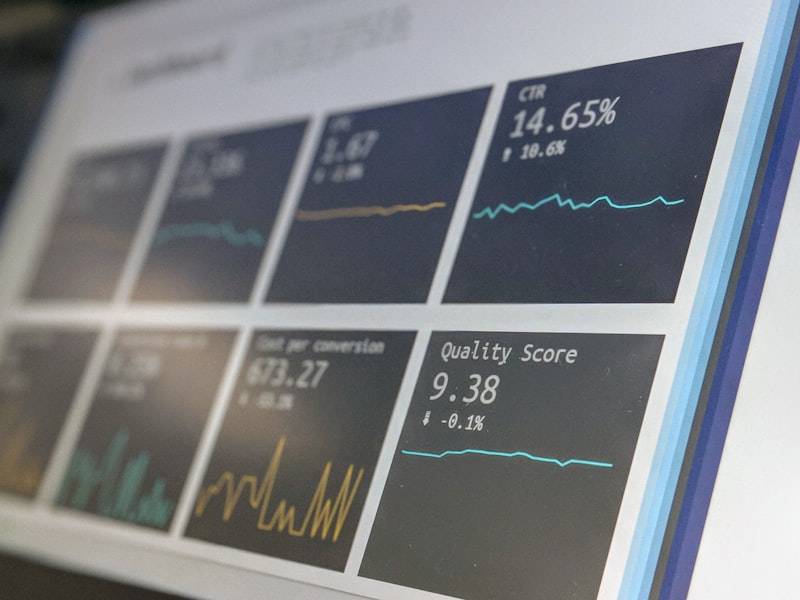
You don't have to digitize everything overnight. A custom dashboard can give you real-time visibility into your operations without replacing your existing tools. The highest-impact first step is getting your lead flow automated: a professional website that captures leads and sends them directly to a tracking system, so you never miss another inquiry. From there, you can layer on scheduling, invoicing, and reporting as you grow.
We help field service businesses make this transition every day — from scattered manual processes to one connected platform. Contact us to talk through your current workflow. We'll identify the biggest bottlenecks and show you what's possible.